Brand identity and logo
A visual identity for a consultancy selling an intangible service across two countries.
Argo Ajans has five clients in three countries: Ensii Beauty and AG Veranda in the Netherlands, Hepsi Türkiye’de in Germany, and Polonya Kampüs and Gelecek Elçisi in Poland. Work runs from Izmir and London; content is written in Dutch, Polish, German and English, and each site is built around the target country’s language and search behaviour.
Discuss your projectEvery company below is a confirmed client and every site is still live, so you can check the work yourself. Names are listed with the country and sector they operate in — no anonymous “international experience” claims.
| Country | Client | Sector |
|---|---|---|
| Netherlands | Ensii Beauty Dutch-language site | Beauty and laser hair removal |
| Netherlands | AG Veranda Dutch market | Aluminium and PVC joinery |
| Germany | Hepsi Türkiye’de German market | Based in Germany; transport from Izmir to Europe |
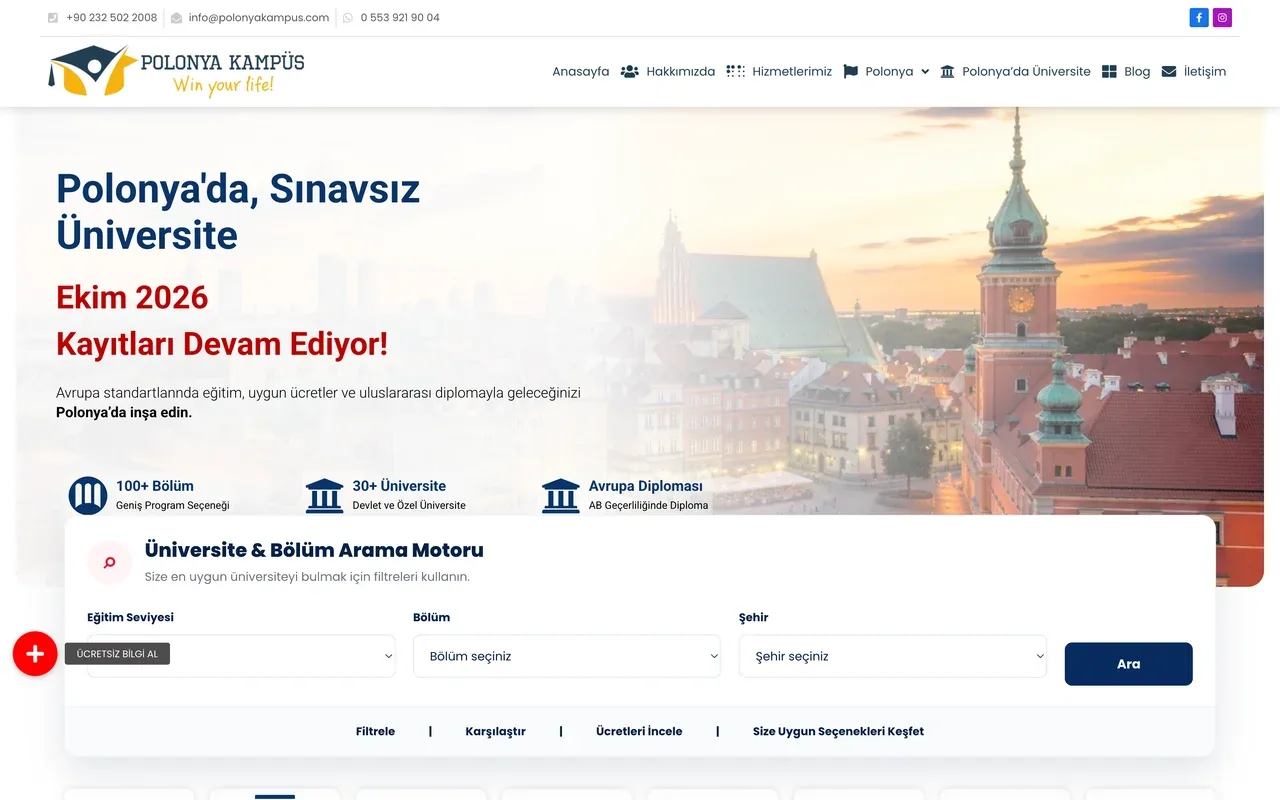
| Poland | Polonya Kampüs Selection software and booking system | Polish universities and education consultancy |
| Poland | Gelecek Elçisi Polish market | Study-in-Poland consultancy |
The Netherlands, Germany and Poland — each with its own language and search behaviour.
Every site on this page is online and verifiable; none of them is a case study you have to take on trust.
Dutch, Polish, German and English content — produced in the target language, not machine translated.
Izmir and London. Overseas projects run from both, with on-site visits planned where they matter.
The sectors we have delivered in abroad are not the same as our domestic mix, so their digital needs differ too. This table describes what each sector typically requires in its own market — it is a sector-level view, not a claim about an individual client’s scope.
| Sector and market | Typical digital requirement |
|---|---|
| Education consultancy (Poland) | University and programme discovery, a selection tool, online appointments, multilingual content and student-parent communication |
| Beauty and aesthetics (Netherlands) | Dutch-language service pages, local search visibility, online booking, before-and-after content and review management |
| Aluminium and PVC joinery (Netherlands) | Product and installation gallery, quote and survey form, service-area pages, local search visibility |
| International transport and logistics (Germany) | Route and service presentation, quote workflow, German content, shipping process and FAQs |
Poland is where our overseas work is deepest. Polonya Kampüs helps students apply to Polish universities, and the project went well beyond a website: the discovery and booking tools were built as custom software. Everything listed here is documented in our project registry.
A visual identity for a consultancy selling an intangible service across two countries.
The corporate site carrying university and programme discovery, in the language the student actually reads.
A custom tool that turns a long university list into a shortlist a student can act on.
Bookable consultations built into the same digital experience instead of a separate form.
Campaigns on top of that structure, so paid traffic lands on something that already converts.
A site that works in Turkey does not automatically work in the Netherlands, Germany or Poland. Four things change, and they change the build — not just the copy.
Writing in the target country’s language is not translating Turkish copy. In Dutch, Polish and German content, product and service names, search patterns and official terminology are built for that language.
Google in Germany, Google in the Netherlands, Google in Poland — but the questions, comparison sites and local directories differ from country to country. Structured data and page architecture are built accordingly.
The Google Business Profile logic you use in Turkey does not carry over unchanged. Address, service area and language are set up separately for the target country’s local results.
Overseas projects bring GDPR into play: where form data is stored, cookie consent and the privacy notice have to be right from the start. We do not give legal advice — we build the structure by asking the right questions, and your legal advisor approves the wording.
Overseas projects fail on language and local search far more often than on design. The flow below is what we run instead.
The target country, buyer type, language and that country’s search behaviour are mapped, and the content plan is written against that map.
Copy is produced in the target language or written with a native-speaking editor; machine translation is not used.
The site is built with hreflang, a language-based URL structure, structured data and a measurement foundation, and forms are set up to be GDPR-sound.
After launch each country’s search performance is tracked separately, and we report which country produced which enquiry.
We have five clients across three countries: Ensii Beauty and AG Veranda in the Netherlands, Hepsi Türkiye’de in Germany, and Polonya Kampüs and Gelecek Elçisi in Poland. All five sites are still live; the links are in the table on this page. Candidates we have spoken with in Belgium and the UK are not listed because they are not confirmed.
Work runs from our offices in Izmir and London. Discovery and presentations happen online, with an on-site visit planned where it matters. The only real difference from working with a client in Turkey is that content is produced in the target language and measurement is tracked per country.
Turkish and English are our working languages, and we have also produced Dutch, Polish and German content. On overseas projects we do not use machine translation: copy is written in the target language or produced with a native-speaking editor.
Yes. The target country’s search behaviour, comparison sites, local directories and official terminology differ from Turkey’s. Keyword lists, page architecture and structured data are therefore built per country. Being cited in AI answers also requires content in the same language and the same question patterns.
We build the GDPR-related structure: where form data goes, cookie consent, privacy notice links and hosting choices. We do not give legal advice; your legal advisor approves the wording. We settle that division at the start of the project so there are no surprises later.
Overseas projects are priced on scope in the same way as domestic ones; the difference is that the proposal is prepared in euros or pounds and in two languages. The payment plan is tied to project milestones, and the contract and invoicing side is settled at the start. A validity period is stated in writing so currency movement does not become a surprise.
You can, but adding translations is not the same as building a multilingual site. The existing structure needs language-based URLs, hreflang, structured data and measurement that match, otherwise search engines cannot tell which page is for which language. We first review the current site technically, then say in writing which pages stay and which need rewriting.
Time zone differences are rarely a blocker; meetings are placed in the overlap between both working days. After launch, content updates, technical maintenance and measurement support continue exactly as they do on projects in Turkey.